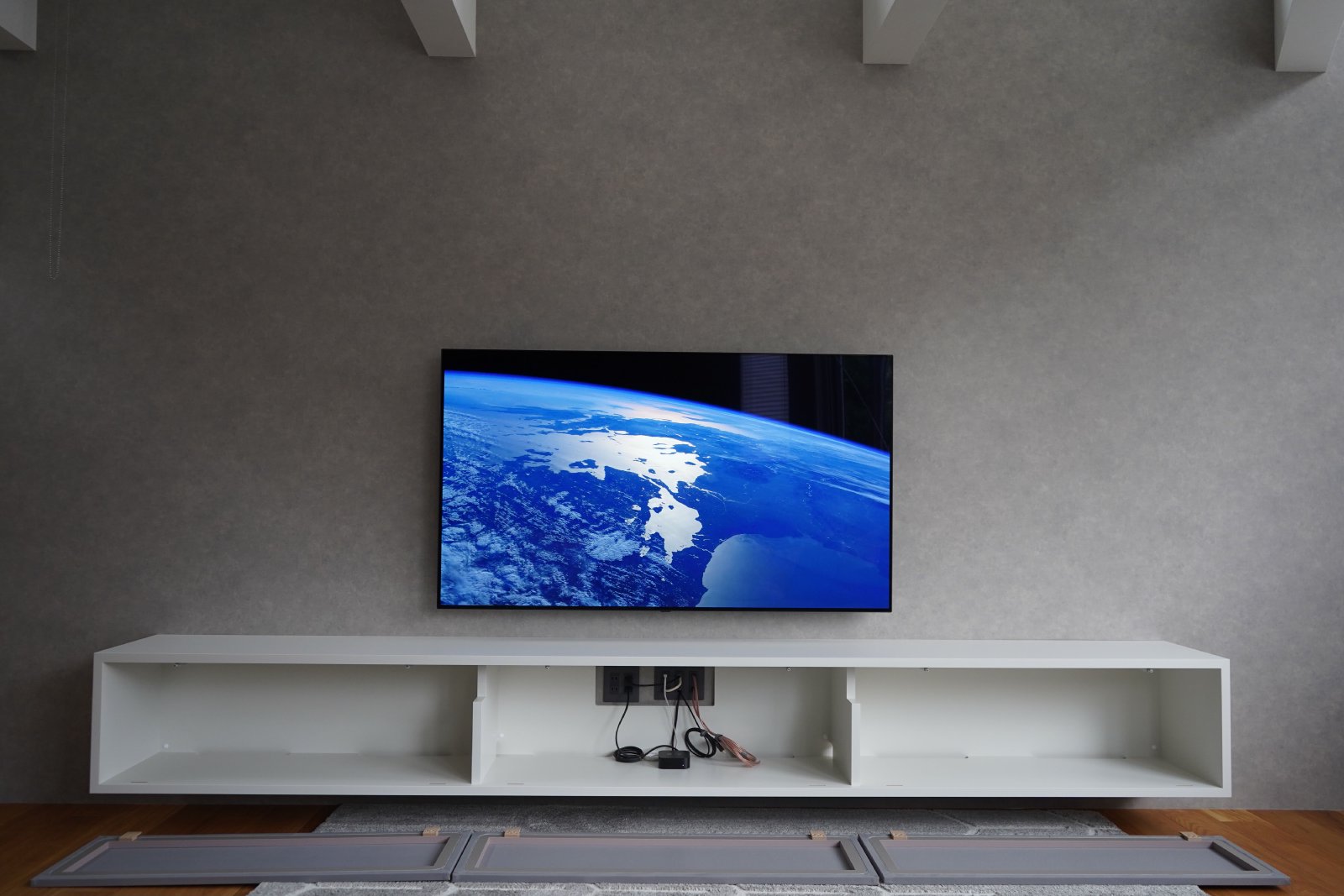
A very large soundbar, I mean "entertainment center"
I designed the entertainment center for our new living room and hired a local workshop to build it.
Naturally, I spent a completely reasonable amount of time on it.
Design
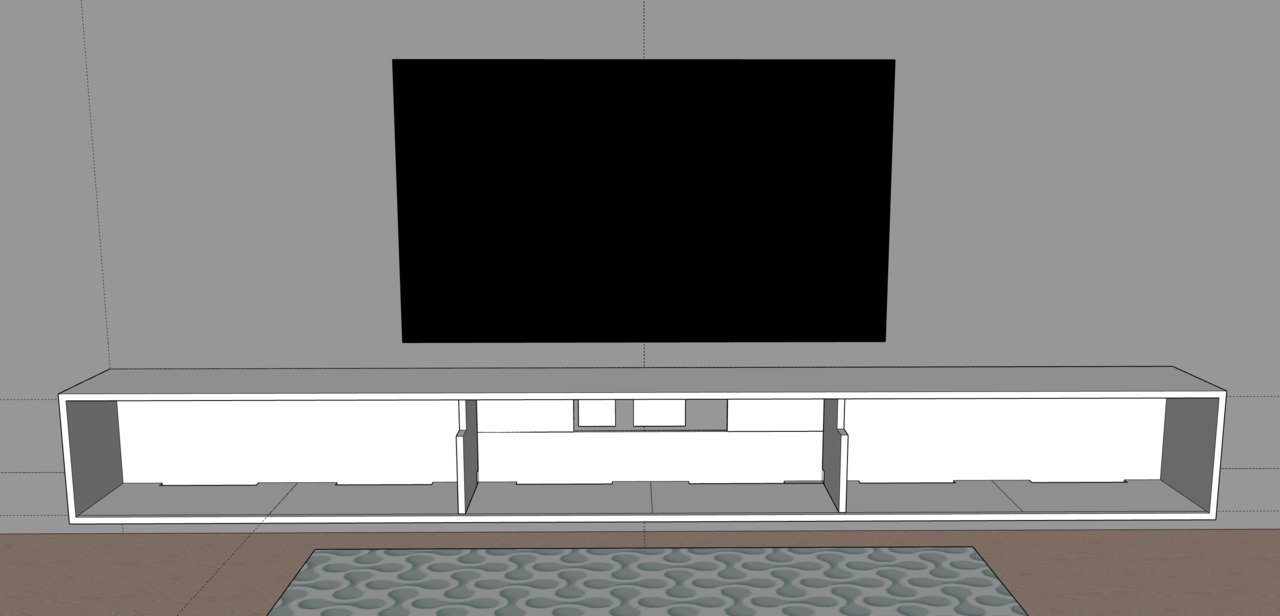
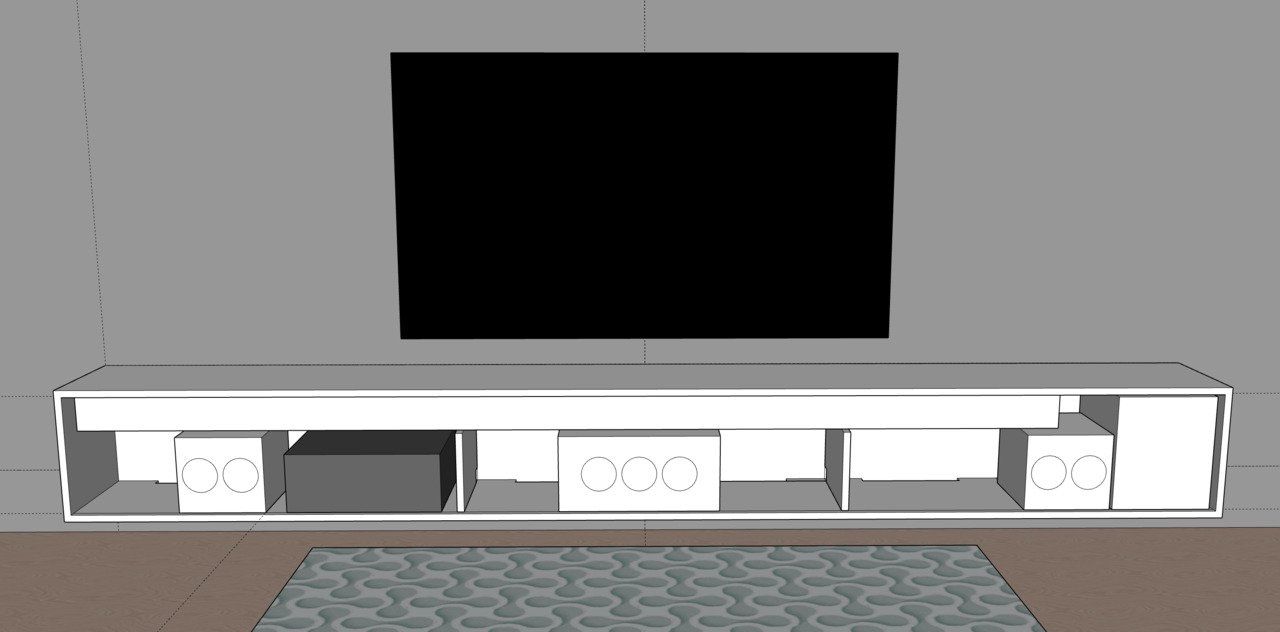
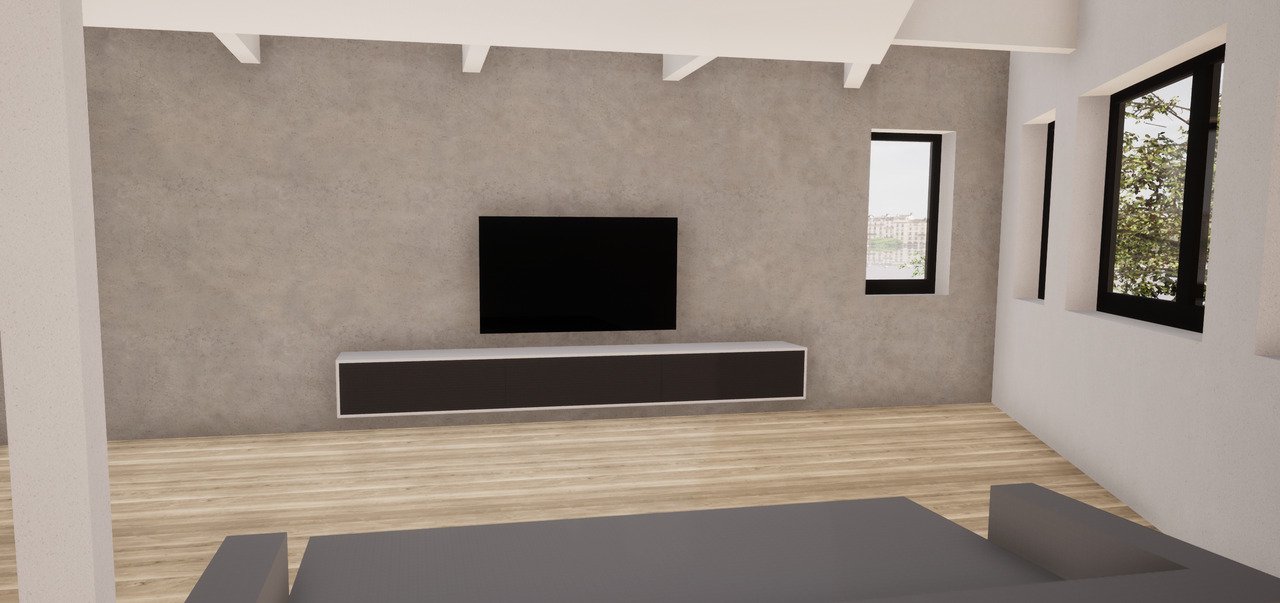
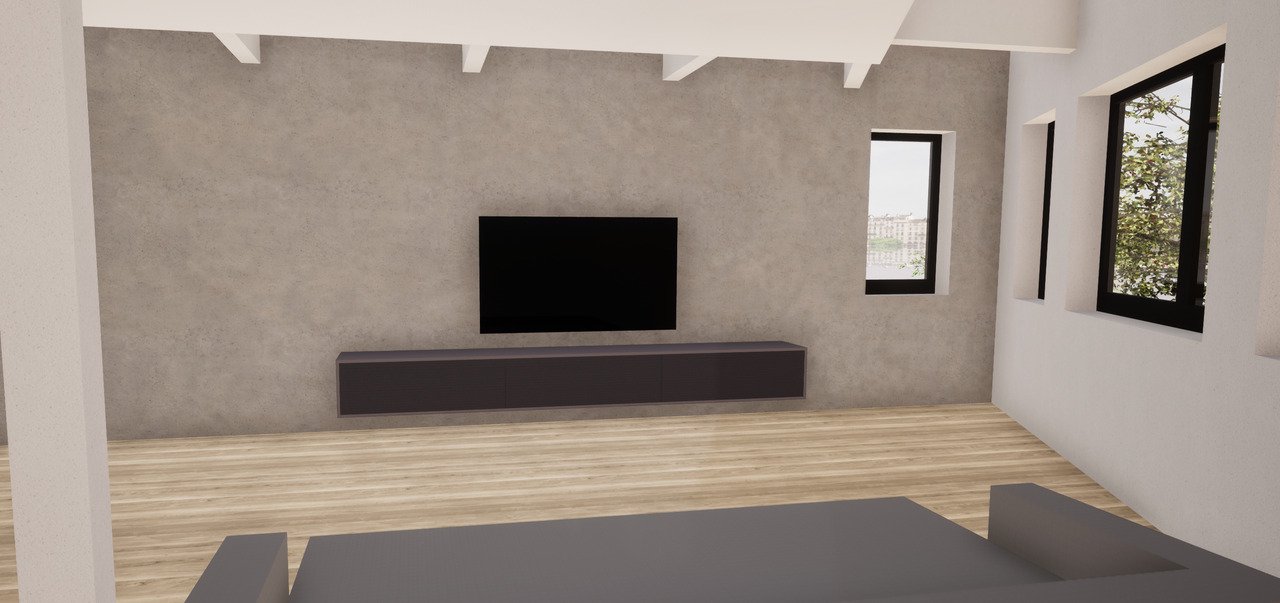
I used Sketchup to build different ideas and Twinmotion for visualization, as I did with the house itself.
We started with an open design idea. I think it was from the architect.
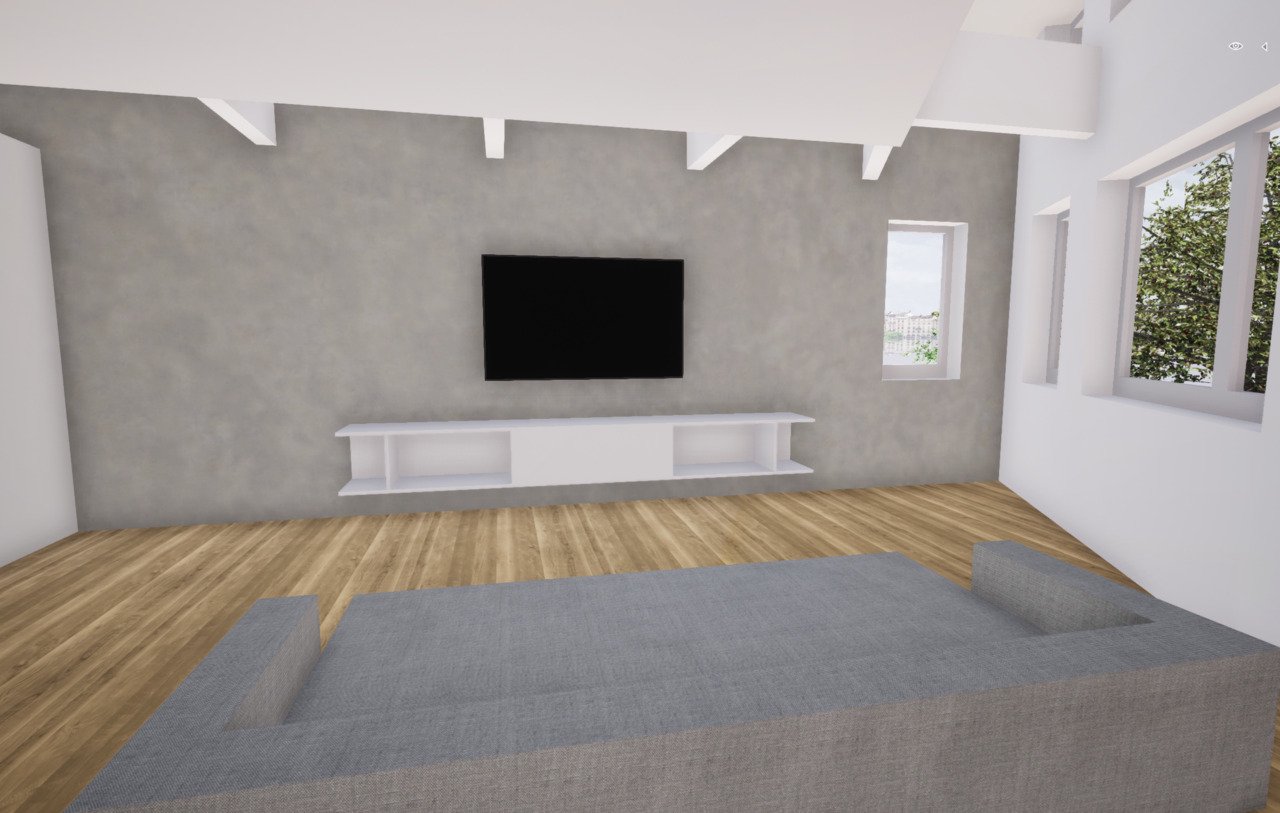
I wanted a cleaner look though, so I started experimenting with more box-like shapes with fabric covers.
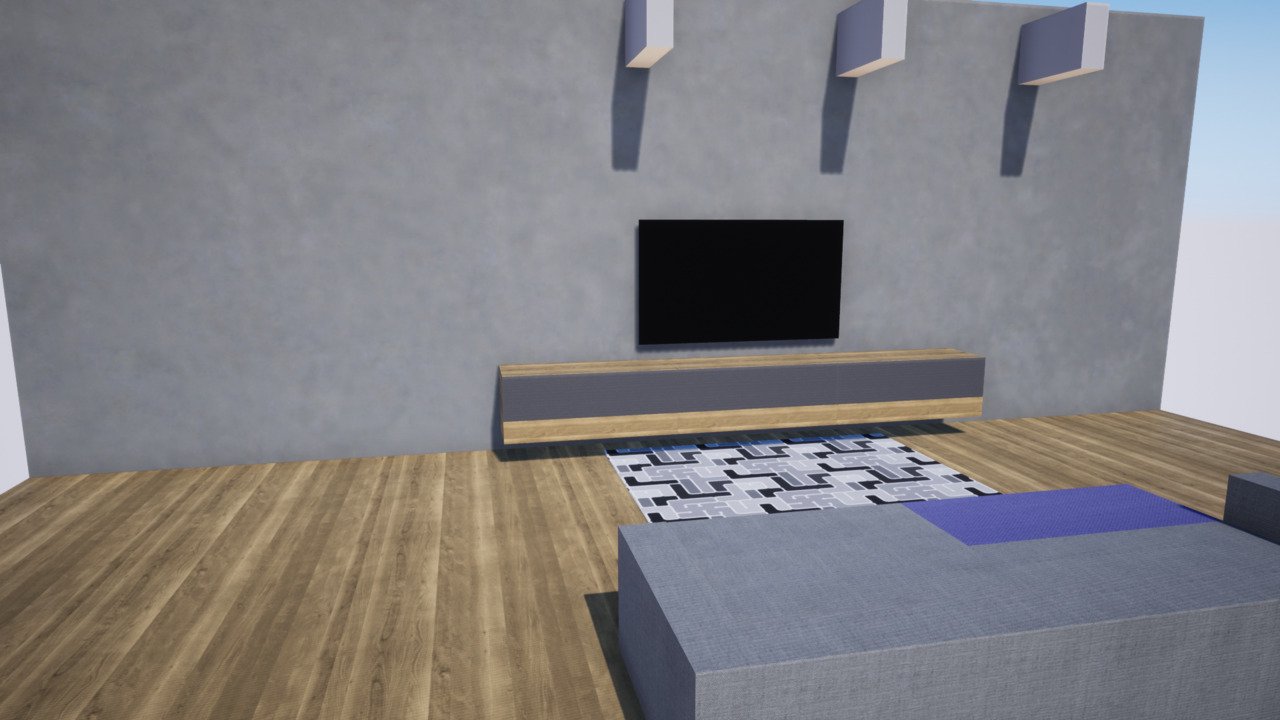

Fabric doors make a lot of sense not only for sound transparency, but also IR remote signals. It seemed that there should already be a product like this, which led me to … Unnu.
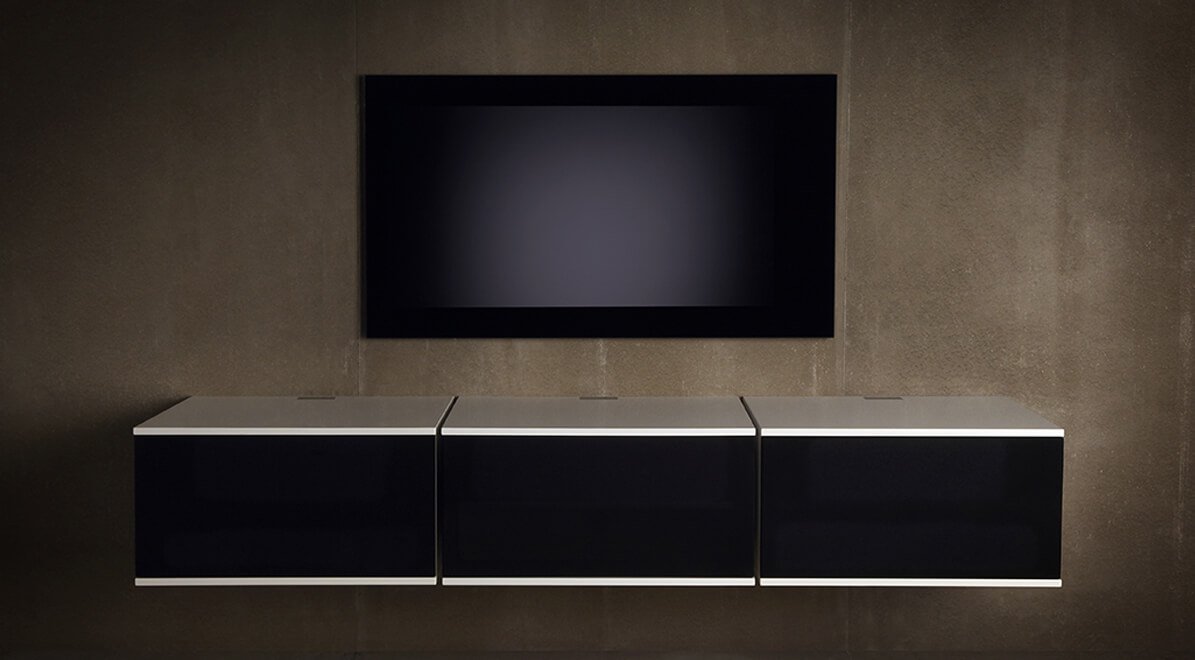
Nice, but the nearest dealer was in Australia. There was another very similar Nordic company, IIRC. I liked the clean melamine look, so I tried a few similar ideas, previewing again in Twinmotion. We ended up going with the first option.
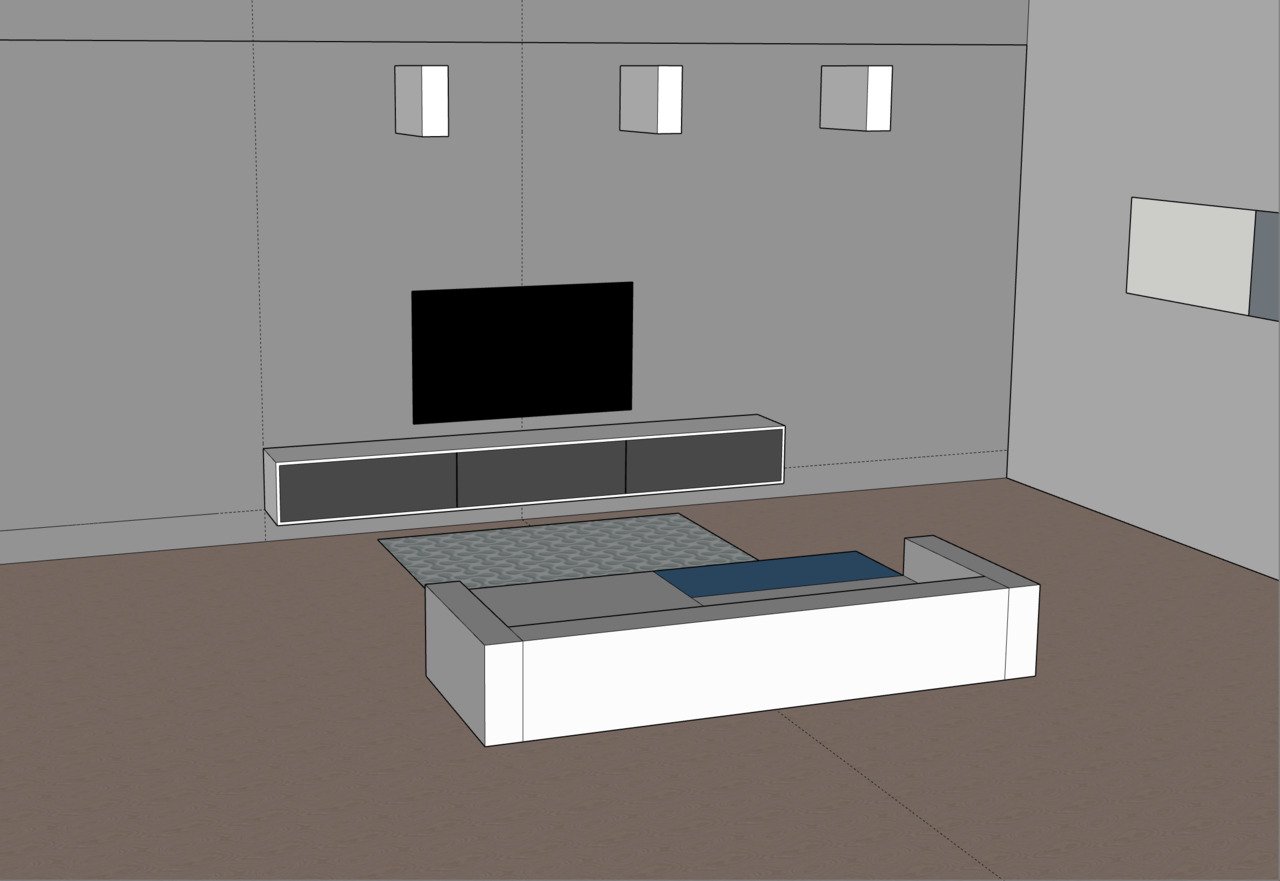
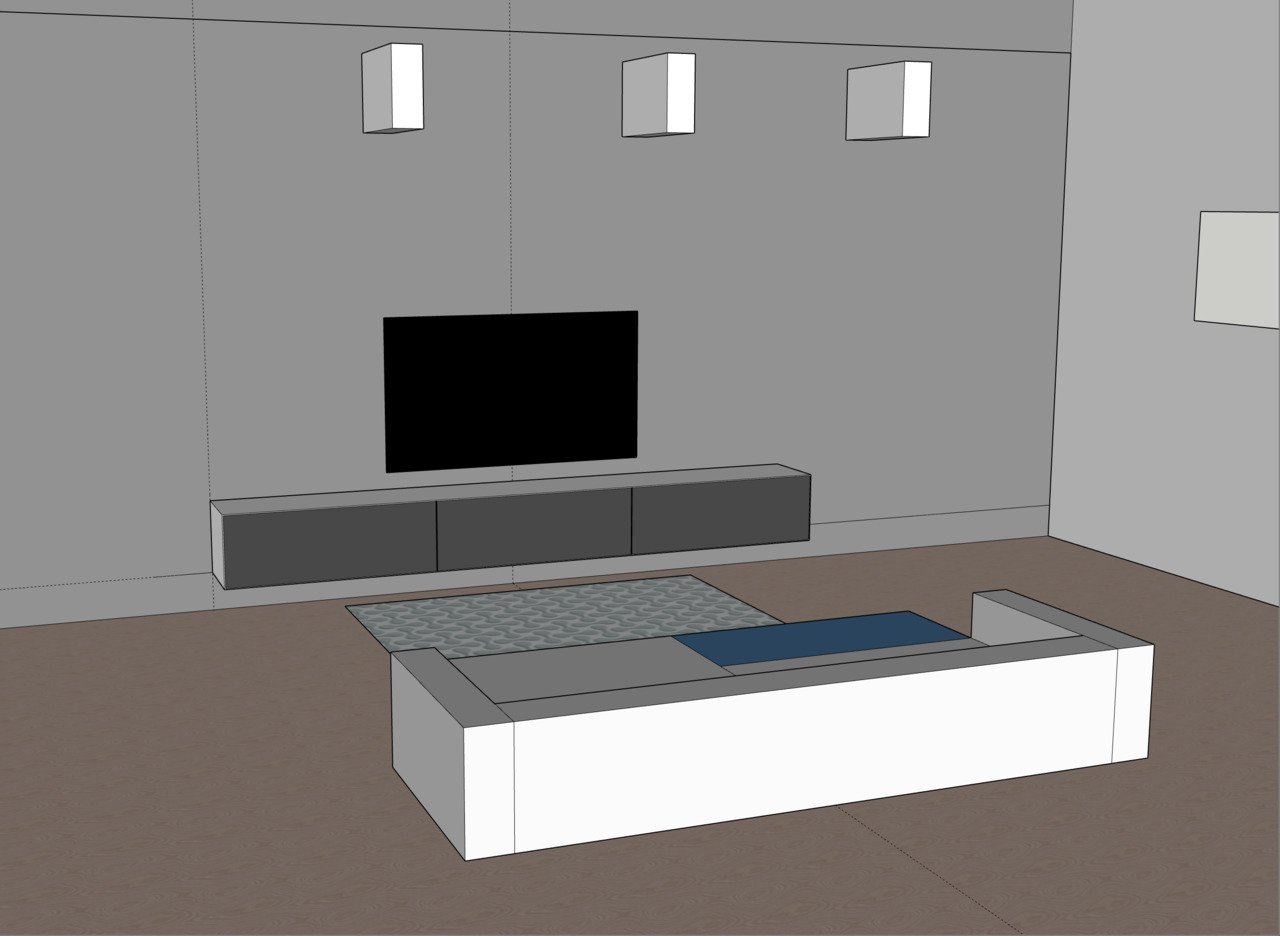
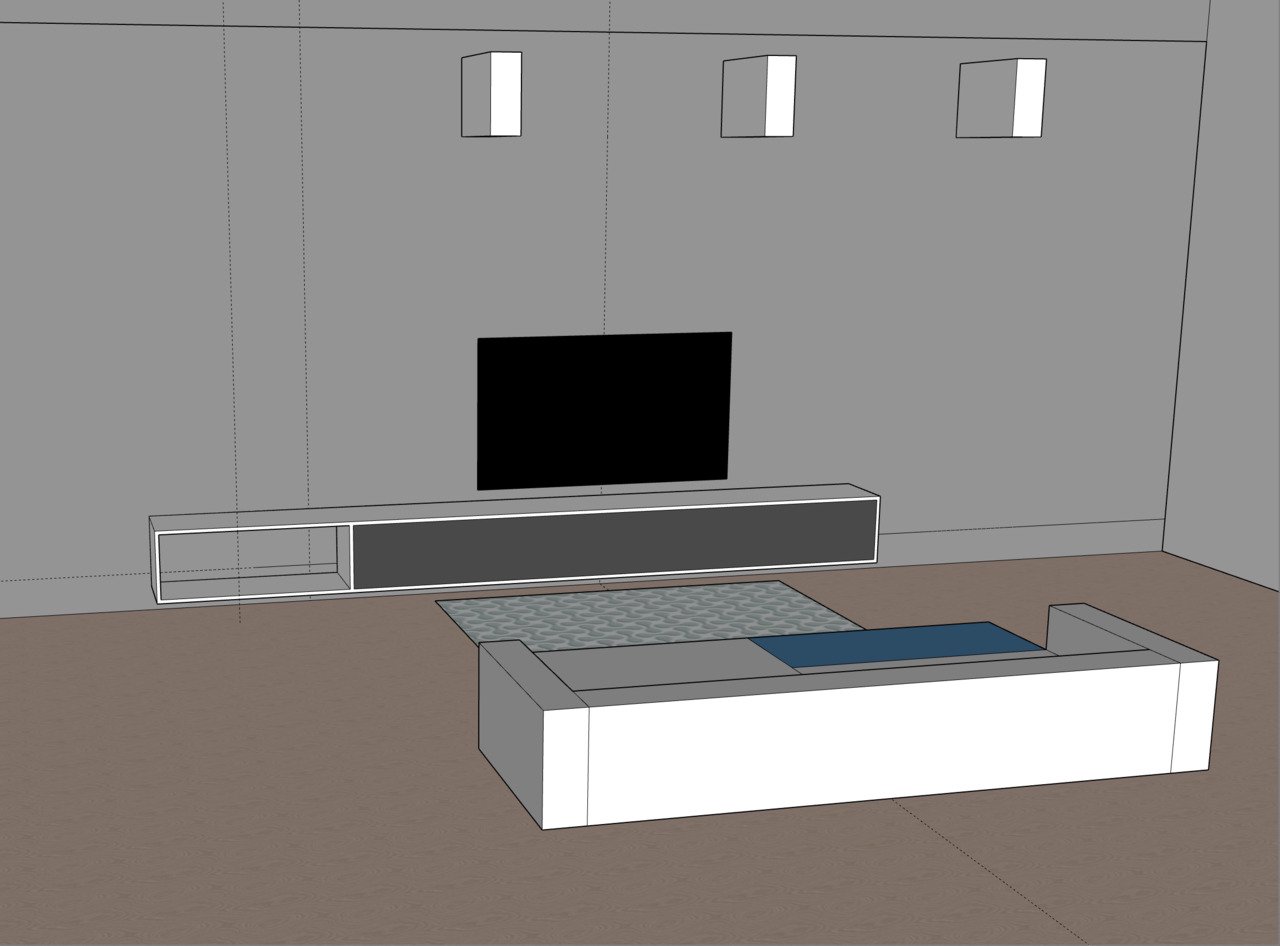
And then there were the color variations…
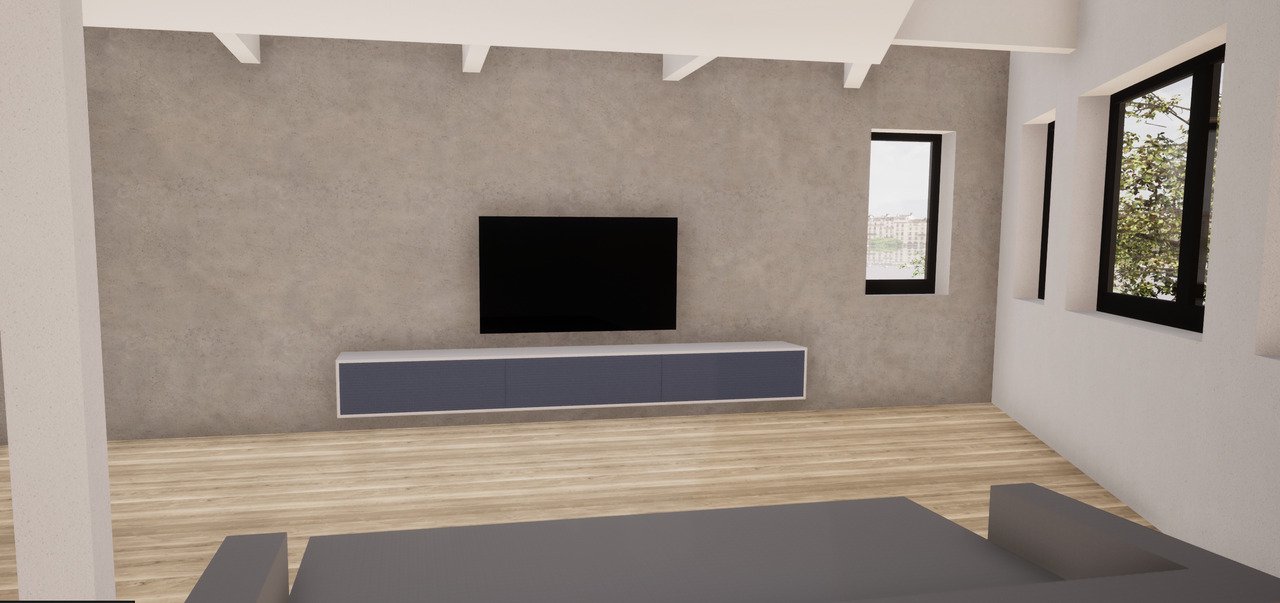
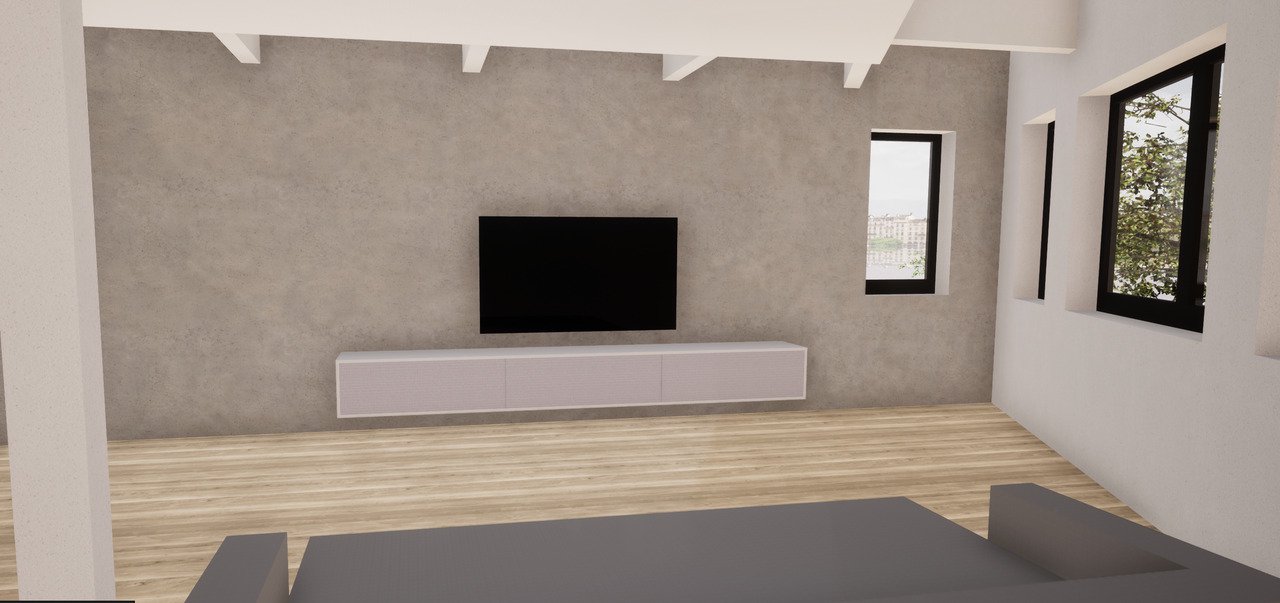

Fabric
It’s surprisingly hard to find acoustic fabric. By “acoustic” I mean that it’s labeled for use in speakers or something like that and is mostly transparent to sound. Even better if there are measurements of acoustical properties. Search on amazon and you may find a roll of generic black speaker fabric, but that’s about it.
There is one store in the US that specializes in acoustic fabric, and it seems to be where the few people in the world who care go to buy. Ordering and shipping internationally was a nightmare, but I eventually got some nice gray fabric.
In retrospect I would look for alternative fabric stores. I doubt that the fabrics sold were manufactured with acoustic properties in mind. More likely they’re just normal fabric and the store took some measurements.
Features
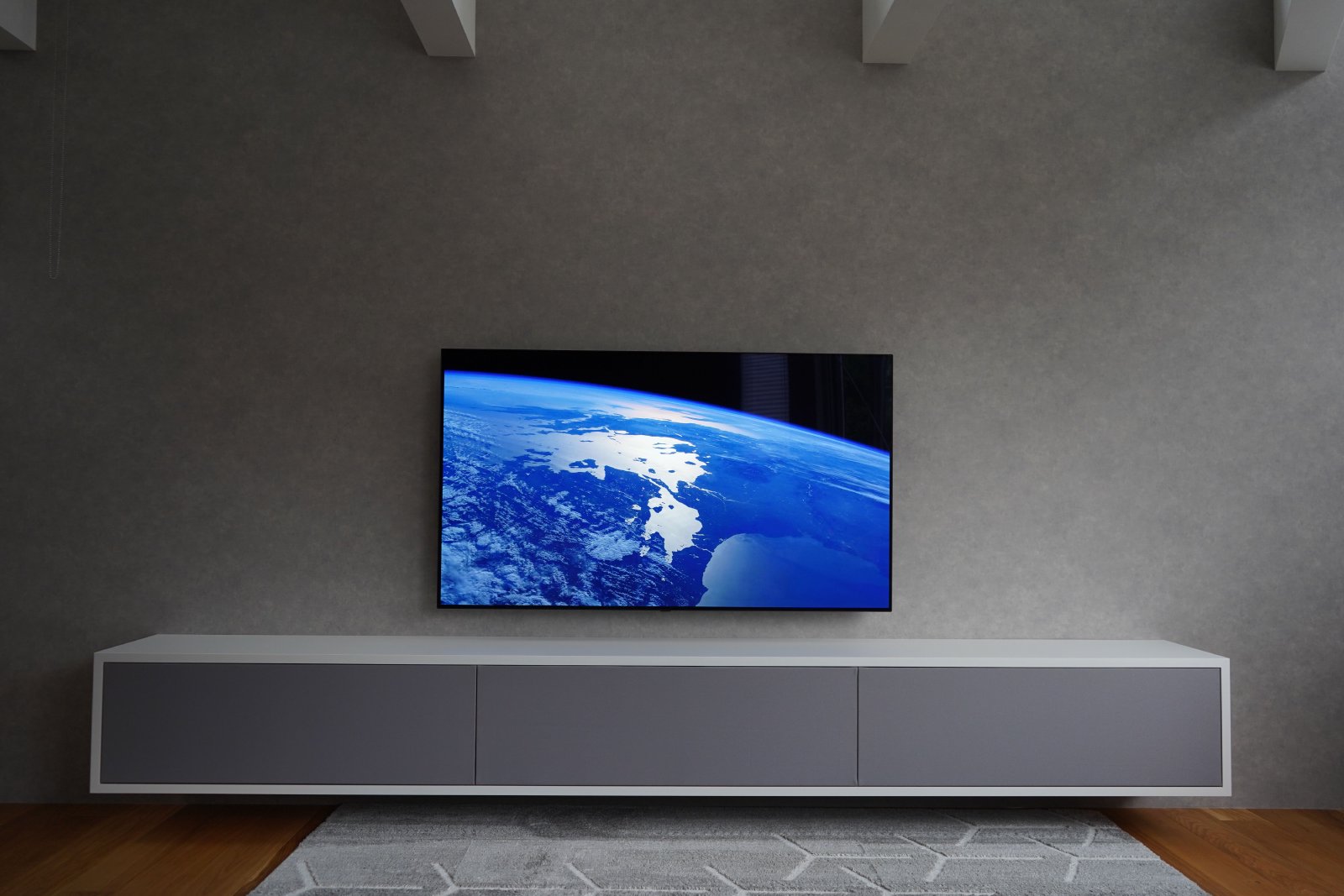
I’m pretty happy with how it turned out!
- the doors come off which makes it easy to move around heavy receivers, speakers, and subs.
- the fabric is nicely transparent to remote controls and sound
- there’s a cutout to store a 130" projector screen
- the top has no holes for cables as they are routed through the wall
- the fabric is held in place by rubber tubes pressed into grooves in the doors and can be easily replaced, in theory.